Why We Do What We Do: The Vision Behind We The Free
By James Hattersley · September 22, 2025
At We The Free (WTF), our mission is not simply to “outreach our way to a vegan world.” Instead, it’s about driving systemic change through transformative conversations and building a unified, powerful movement. Understanding why we do what we do - and the theories underpinning our approach - is key to staying inspired and effective. In this post, we’ll explore the deep rationale behind our work and how every volunteer contributes to a brighter future for animals.
The Foundation of Change: Our Two-Fold Approach:
1. Creating Vegans Who Drive Systemic Change (Be The Change!)
Through evidence-based communication and innovative outreach events, WTF inspires individuals to embrace veganism. These vegans, in turn, play critical roles in driving systemic change by:

- Voting as consumers: Choosing plant-based products reduces demand for animal-based ones, which influences market trends and corporate priorities.
- Voting as citizens: Supporting legislation that protects animals and promotes plant-based initiatives drives policy reform.
- Voting as institution members: Advocating for changes within workplaces, schools, and communities creates ripple effects, evidenced in successes like the Hayek Hospital in Lebanon becoming fully vegan or the powerful Plant Based Unis and Plant-Based Councils initiatives.
Every conversation and connection made through our outreach helps individuals understand their potential to shape a more compassionate world.
2. Building a Strong and Unified Movement
Creating vegans is vital, but it’s not enough on its own. We also focus on building a healthier, more effective movement:
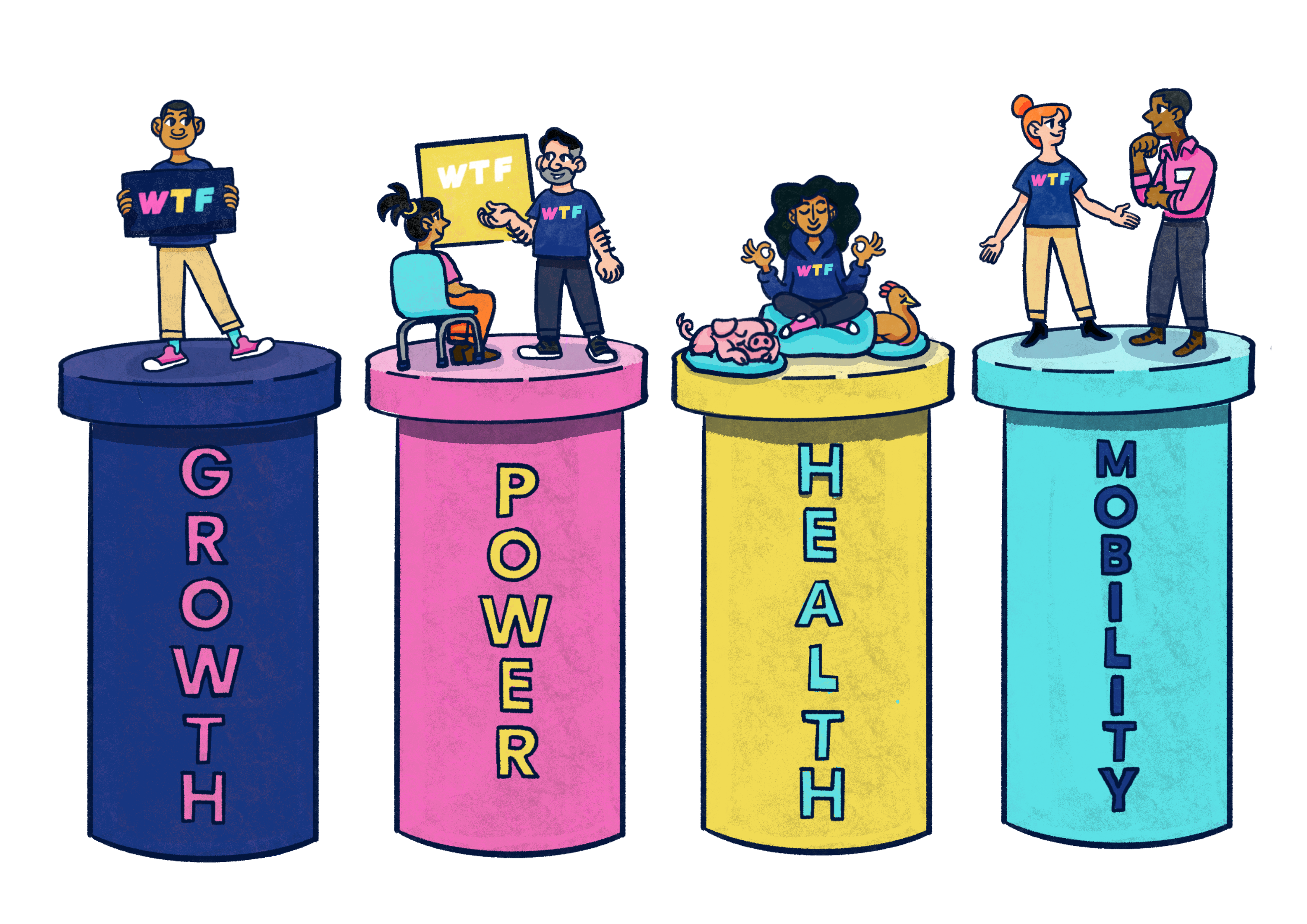
- Movement Growth: Recruiting new activists and supporters through street outreach, events, and online platforms.
- Movement Power: Equipping activists with skills, training, and strategies to professionalize their advocacy.
- Movement Health: Addressing conflict and promoting mental well-being to ensure long-term engagement.
- Movement Mobility: Building connections between organizations and different types of advocacy to foster collaboration and unity.
By combining these pillars, we aim to create a coordinated movement that is not only growing but thriving, and capable of effecting large-scale change.
Where We Fit: WTF's Role in the Movement Ecosystem
Recommended Viewing: This video by Laila Kassam provides an easy to digest overview of the following concepts.
The social movement ecosystem framework identifies three key areas essential for creating change: Personal Transformation, Building Alternatives, and Changing Dominant Institutions. Each of these areas plays a unique and vital role, but real progress happens when these strategies work in conjunction with one another.
- Personal Transformation: “Be the Change”: By using initiatives like the 3 Minute Movie Challenge, WTF helps people reflect on their choices, sparking personal growth and inspiring them to embrace veganism.
- Building Alternatives: As activists, we are willing to make all kinds of personal changes to reject the commodification and exploitation of other earthlings. However, to accelerate shifting behaviors in the general public our society needs more accessible and ethical options. Although WTF activities don’t take place in the “building alternatives” space, by creating demand for plant-based products, we support the businesses, innovators, and systems paving the way for a cruelty-free future.
- Changing Dominant Institutions: To make lasting change, we need to shift the systems that shape society. Via our “personal transformation” activities, we create vegans, most of whom will be perfectly placed to influence and vote as members of their institutions. Additionally, WTF trains activists to organize and advocate effectively, helping to influence public opinion, policy, and maybe even corporate practices.
By recognizing and supporting these three areas, WTF strengthens the movement’s ability to grow, adapt, and succeed, and make the vision of a vegan world more achievable.
The Research Behind Our Strategy
Although not an extensive list, here are some of the theories guiding our strategy:
Bill Moyer’s Movement Action Plan (MAP)
The MAP (Movement Action Plan) model provides a roadmap for how social movements evolve and succeed. Moyer’s MAP model describes eight stages that social movements typically pass through, including raising awareness, mass mobilization, institutional change, and eventual success. WTF’s outreach events, like the 3-Minute Movie Challenge, align with the early stages (public education and mobilization). Understanding Moyer’s framework helps us remain patient and strategic during inevitable phases of slow progress and internal reflection.
Crucially, Moyer highlights that effective movements need the following diverse roles to contribute towards their intended goals:
- Citizens: Represent mainstream supporters who advocate within established systems, often providing credibility.
- Rebels: Use bold actions and direct confrontation to raise awareness and highlight urgency.
- Change Agents: Organize, educate, and strategically mobilize community support - WTF primarily fills this role by facilitating transformative conversations and community-driven activism.
- Reformers: Focus on creating and implementing practical solutions within existing institutional frameworks.
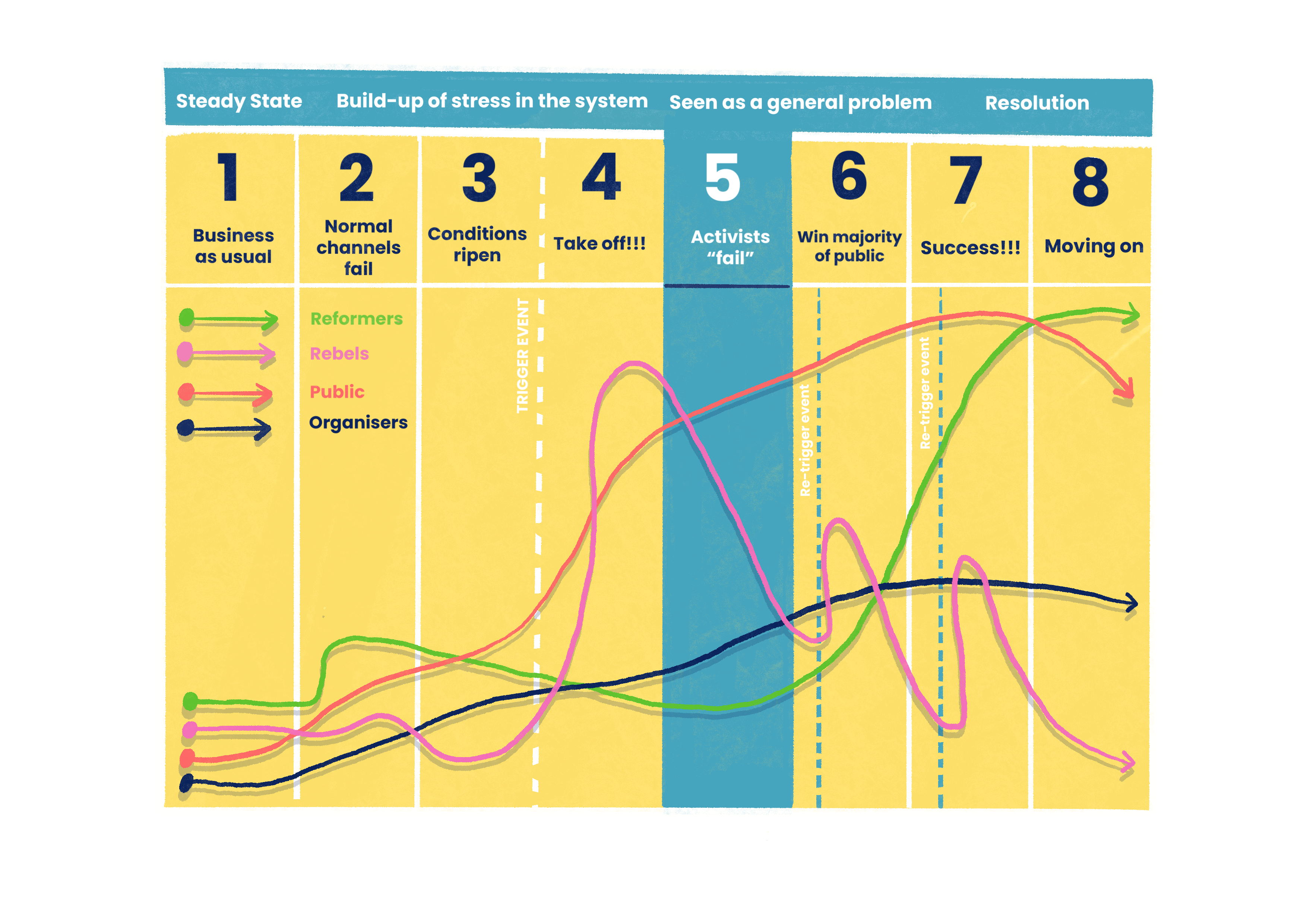
Image credit: Bill Moyer’s MAP 8 stages, re-illustrated by WTF.
Erica Chenoweth’s Research on Nonviolent Movements
Chenoweth’s research highlights a powerful insight: nonviolent movements only need about 3.5% of the population actively participating to achieve success. This means that even small, dedicated groups like ours can create meaningful change. Every activist, conversation, and event contributes to building this critical mass.
Knowing the scale of our potential impact can transform feelings of powerlessness into hope. Each volunteer is part of a global effort with the power to move mountains.

note: It’s important to remember that Chenoweth’s 3.5% figure refers to people who are actively and consistently engaged in nonviolent action—not just those who quietly agree. Real change comes when that small but mighty percentage shows up, organizes, and keeps pushing. For more on this, see Erica Chenoweth’s recent reflections on the 3.5% rule here.
Damon Centola’s book - Change: How to Make Big Things Happen
Damon Centola’s theory in Change challenges the widespread belief that innovations and new behaviors spread primarily through highly-connected "influencers" or via weak ties that provide quick, viral-like transmission. Instead, Centola argues for the concept of complex contagions, where adoption of significant new ideas or behaviors depends not on casual exposure but on reinforcement from multiple trusted contacts within one's social network. This theory aligns directly with WTF’s theory of change, highlighting why movement-building - cultivating deeply connected networks of committed individuals - is essential. By nurturing strong social ties and fostering interlocking networks that reinforce vegan advocacy, WTF ensures a robust and sustainable adoption of veganism and animal rights activism, leading to genuine social transformation rather than transient popularity.
Some additional relevant theories can be found at the bottom of this article.
Your Role in This Vision
As a WTF volunteer, your contributions are essential to every aspect of our mission. Here’s how you can make a difference:
- Volunteer at WTF events: Via activism and outreach, create vegans who permeate through society and vote for a vegan future.
- Support Movement Growth: Recruit new volunteers and help raise funds to expand our outreach and training efforts.
- Build Movement Power: Equip yourself with skills and knowledge through training, workshops, and leadership development. Your competence strengthens the movement.
- Foster Movement Health:
- Be kind and supportive to fellow activists.
- Avoid unnecessary conflicts by giving others the benefit of the doubt.
- Practice sustainable activism by prioritizing your well-being
- Cultivate Movement Mobility:
- Explore different types of activism and collaborate with other organizations.
- Support the efforts of others, even if you disagree with their approach. Unity amplifies impact.
- Be ready and willing to mobilize around strategic moments and trigger events. Be willing to set aside “business as usual” and do something different when you face a call to action.
Every role you play, from recruiting a new volunteer to attending a workshop, contributes to our shared mission of systemic change.
Conclusion
Your efforts at WTF are building a resilient, effective movement to dismantle systemic animal exploitation. By understanding the theories and strategies behind our mission, you become a more empowered and impactful advocate. Together, we are proving that change is possible - one conversation, one action, and one volunteer at a time.
Core Assumptions
Assumption 1: Effective vegan advocacy can inspire behavioral change, leading to a greater number of people adopting a vegan lifestyle.
Assumption 2: Current social and cultural conditions are favorable for the continued growth and success of the vegan movement.
Causal Pathways
1. Community Building
- Investing in community building strengthens volunteer engagement and social cohesion.
- Stronger community bonds lead to higher volunteer retention and improved effectiveness.
- A stable, motivated volunteer base increases the reach and impact of advocacy efforts.
2. Professional Training
- Providing structured training enhances volunteers’ skills, knowledge, and confidence.
- Better-prepared volunteers deliver more compelling and effective advocacy.
- As a result, there is a higher rate of conversion to veganism among the public.
3. Data & Analytics
- Using data to guide decisions leads to more informed and strategic planning.
- Continuous analysis helps refine and optimize advocacy approaches.
- This results in a greater influence on public attitudes and behaviors toward veganism.
Additional Theories That Shape Our Approach
Our strategies are informed by a wealth of social science research, including:
- Framing Theory: How we present veganism matters. Focusing on shared values like compassion, sustainability, and justice helps messages resonate deeply with audiences. (Framing for Social Change)
- Social Norms Theory: Normalizing veganism by creating visible, vocal vegan communities can shift societal expectations. (Social Change Lab)
- Diffusion of Innovations Theory: Early adopters play a crucial role in spreading veganism. By focusing on these individuals, we build momentum toward mainstream acceptance. (Diffusion of Innovations)
- Resource Mobilization Theory: Effective activism requires infrastructure, funding, and volunteer networks to support outreach and advocacy. (Resource Mobilization Theory)
- Theory of Planned Behavior: Shaping attitudes, social norms, and a sense of control helps people feel empowered to adopt veganism and advocacy. (Theory of Planned Behavior)
- Stages of Change Model: Recognizing where individuals are on their journey—from pre-contemplation to action—helps us tailor our outreach effectively. (Transtheoretical Model)
These theories collectively guide our focus on education, norm-shifting, and sustained activism for long-term impact.
